
Featured Posts

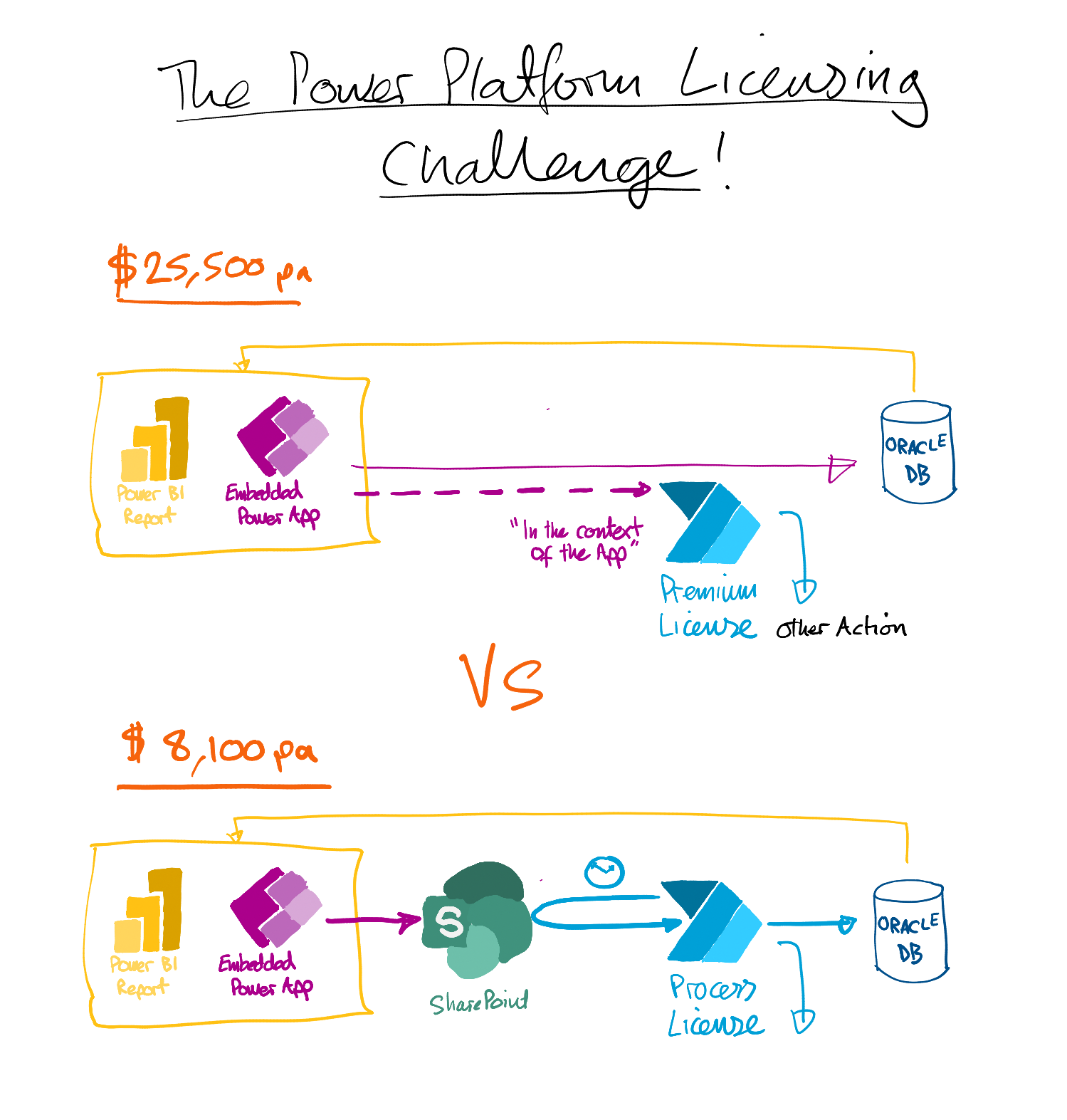
PP - which license when?
One of the challenges with Power Platform licensing is how to bring the different licenses together to achieve your use case in the most efficient way. Depending on the requirements of your use case, and how you therefore architect your solution, you could have different licensing options! What do I mean? Well let me show you…. with some pictures!

Copilot Licensing
Coilot Studio and licensing is the next piece of the broader Power Platform puzzle to explore - What does it mean? What does it cover? What sort of use cases might it apply to. In this post I explore it and try to explain it and the naming convention.

Power Platform Licensing
One of everyone’s favourite Power Platform topics is that of licensing and more specifically… HOW DO I TRANSLATE THIS LICENSING GUIDE INTO HUMAN LANGUAGE?
One area that’s not so clear for people is understanding what Power App or Power Automate licenses are needed in which scenario how to apply it and which licenses are needed for their use case.
In this blog post you’ll understand more!
Power Platform Security
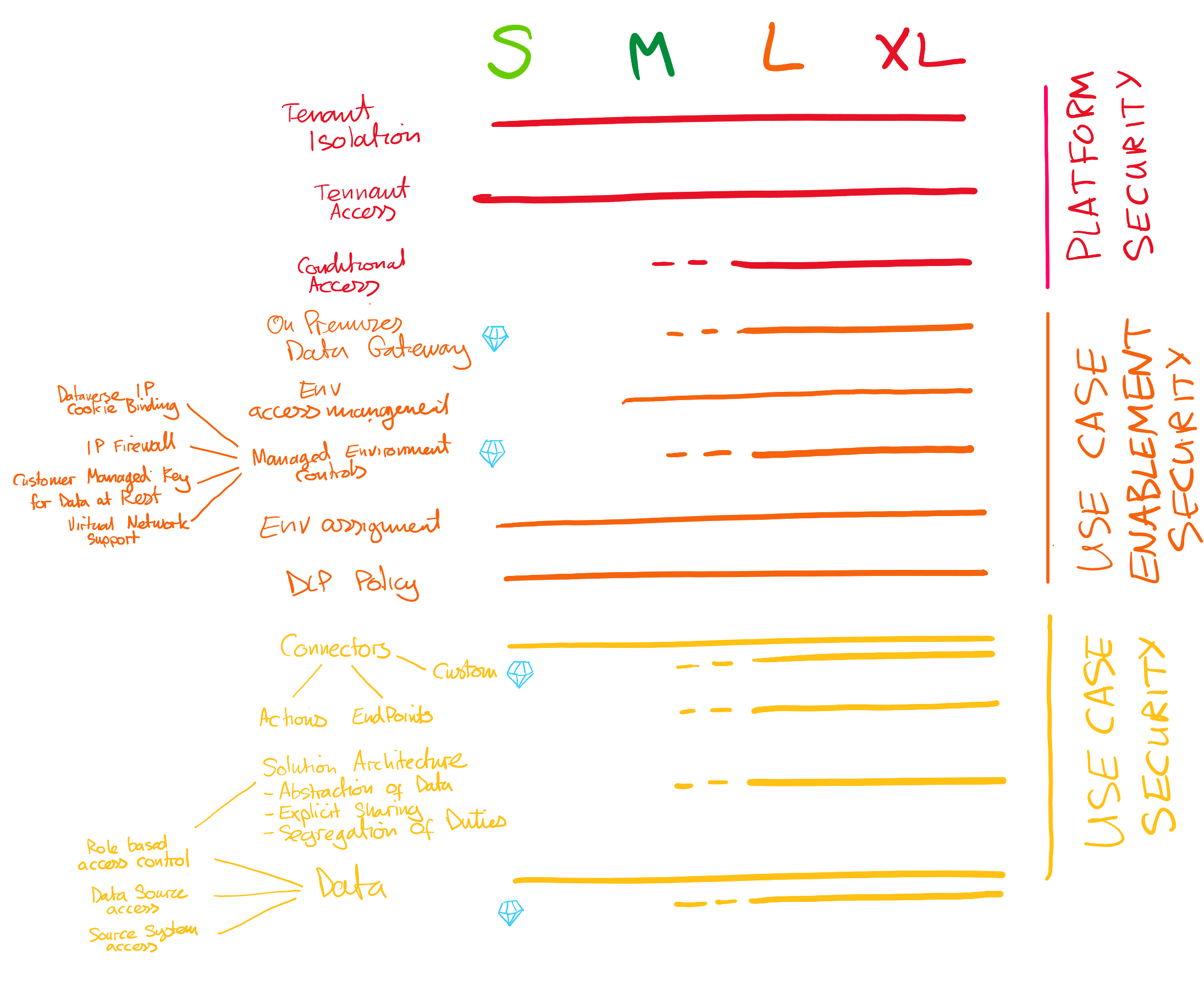
Security is one of the most important considerations when enabling the Power Platform in your organisation. In this post I’m going to give you an overview of the broad scope of different Security controls we can implement, and some suggestions on how these can be layered on top of our scalable governance model to take a ‘risk based approach’ to the different ideas and use cases being implemented across our organisation!

PP DLP and connectors
For some experimentation may conjure up images of an insane scientist mixing together random connectors in the hope of finding a solution to all of an organisation’s challenges…
for others it might be a more regulated scientific method to ensure safe and repeatable results that can be scaled in a controlled and effective way!
In this post we’ll explore how we might unlock experimentation with Power Platform connectors!

Governing to enable solutions and people
Implementing governance through Platforms, Processes, and People is the key to enabling success and value with Power Platform. But How?
In this blog post I’ll break this down, align it to our Scalable Governance model, and walk you through a scenario on how we can integrate our thinking around these governance elements to enable our business.

Default Environment Routing - Yes or No?
There are a lot of new ways to manage your Power Platform estate coming from Microsoft - Default Environment Routing is one of these - Providing every maker with their own developer environment rather than using the shared default environment…
But how might you use it? What are the benefits and complexities? Should you use it? We’ll explore that together in this post!

DLP Policy Strategy
Data Loss Prevention Policies, coupled with Environment Strategy, are the back bone to our platform governance. By designing our DLP strategy aligned to our Scalable Governance model we can manage risk associated with what systems, data sources, or services are being connected to, how, to do what, and by whom. In this post we’ll break down DLP controls and how we align these to our holistic model.
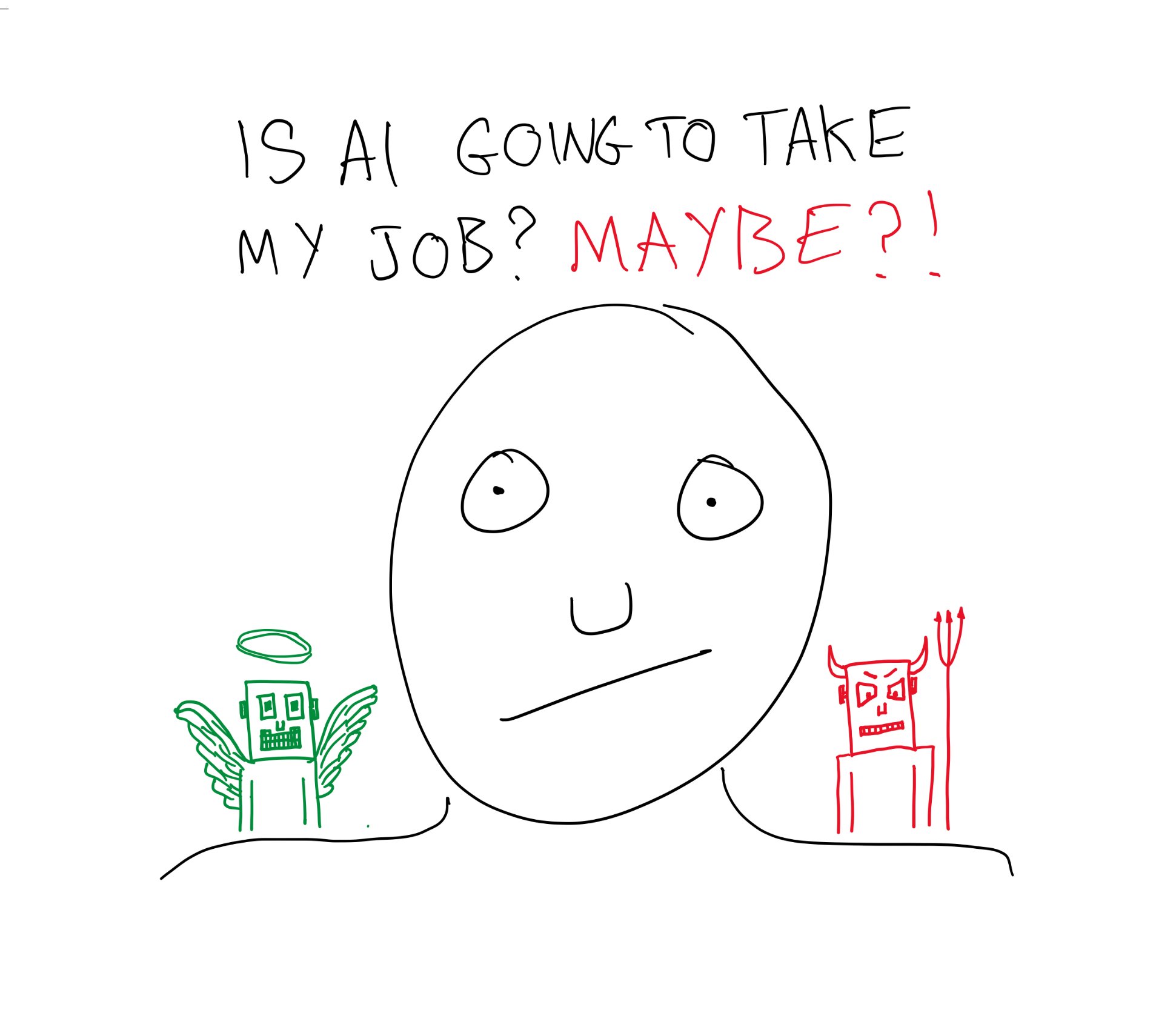
Is AI going to take my job? Maybe?!
Are you ready for the AI revolution? This white paper will show you why AI is the biggest thing since the Industrial Revolution, and how it follows the law of accelerating returns.
You will also find out how AI will affect your work, your skills, and your life, and what you can do to get ready for the future.
Whether you are a government, an organisation, a tech company, or an individual, you need to learn, share, and collaborate with AI. Don't let this chance pass you by.
Read this white paper and be part of the AI revolution.

Environment Strategy
Configuring Power Platform is a key part of being able to enable a scalable governance model that balances enablement with safety and security.
Our Environment Strategy is the key foundation of this and the capabilities of Managed Environments and recently announced Environment Groups turbo charge this and make it even easier to manage them.
In this blog post we’ll take a look at how these come together and you can use them to power up your organisation!

Scalable Governance v2
Not all solutions are the same complexity, criticality, size so we can’t, or more importantly shouldn’t, look to govern them all in a single way. Small solutions should be governed lightly, more critical or sensitive solutions should be governed robustly.
In v2 of this scalable governance model this model gives an improved method of defining a common language and a standard way of assessing and defining action around different scales of ideas, use cases, and solutions, whilst giving flexibility to apply it to any organisation, in any industry, at any scale.

Maker Movement v2
Do you want to enable people and organisations to change behaviours and embed different ways of thinking and acting to drive culture around AI / Copilot, Low Code / Power Platform?
Are there other outcomes you’re trying to drive, tech or non-tech related, where you’re trying to drive a change in awareness, perception, behaviour, or actions?
Well say “Hello!” to the ‘Enablement Engine’ the v2 of a model we can use to enable people and organisations to change behaviours and embed different ways of thinking and acting to drive culture.
This simplification of the iterative cycle, and the rename, is to show that this isn’t just a ‘Maker Movement’ - This is a way to Enable the world!
Come and read all about it and some examples of how these steps could be used to Enable AI and Microsoft Copilot!


Celebrate
A key part of the Maker Movement in enabling adoption is story telling. We want to celebrate the people, behaviours, and ‘things’ that people are doing, learning, sharing, making.
In this blog post we’re going to look into what we should be looking to celebrate to reinforce our desired behaviours and inspire others to do the same. We’ll look at some of the audiences we’d like to share these celebrations with and some of the approaches in doing it.

Solve Problems
How do we help give people a scalable structure that helps them identify potential use cases in their work, design and build it right and well, relase it into the wild to our users, support it, and iteratively improve it? Well fear not…. In today’s blog post you’ll read about the latest part of the ‘Maker Movement’ in enabling people and growing adoption!

Educate
LET’S BUILD SUPERHEROES!
In my latest blog post we focus on an approach to educating those ‘Leaders’ and ‘People’ who we have inspired in previous steps of the ‘Maker Movement’. We start to identify a structured approach to teach them HOW to learn not WHAT to learn based on Formal Training, learning from others, and learning whilst doing.

Power Platform Copilot licensing
Have you been wondering what Copilot means in the context of Power Platform? How does it link together? What licenses do I need?
This is how I currently understand it…

Leaders
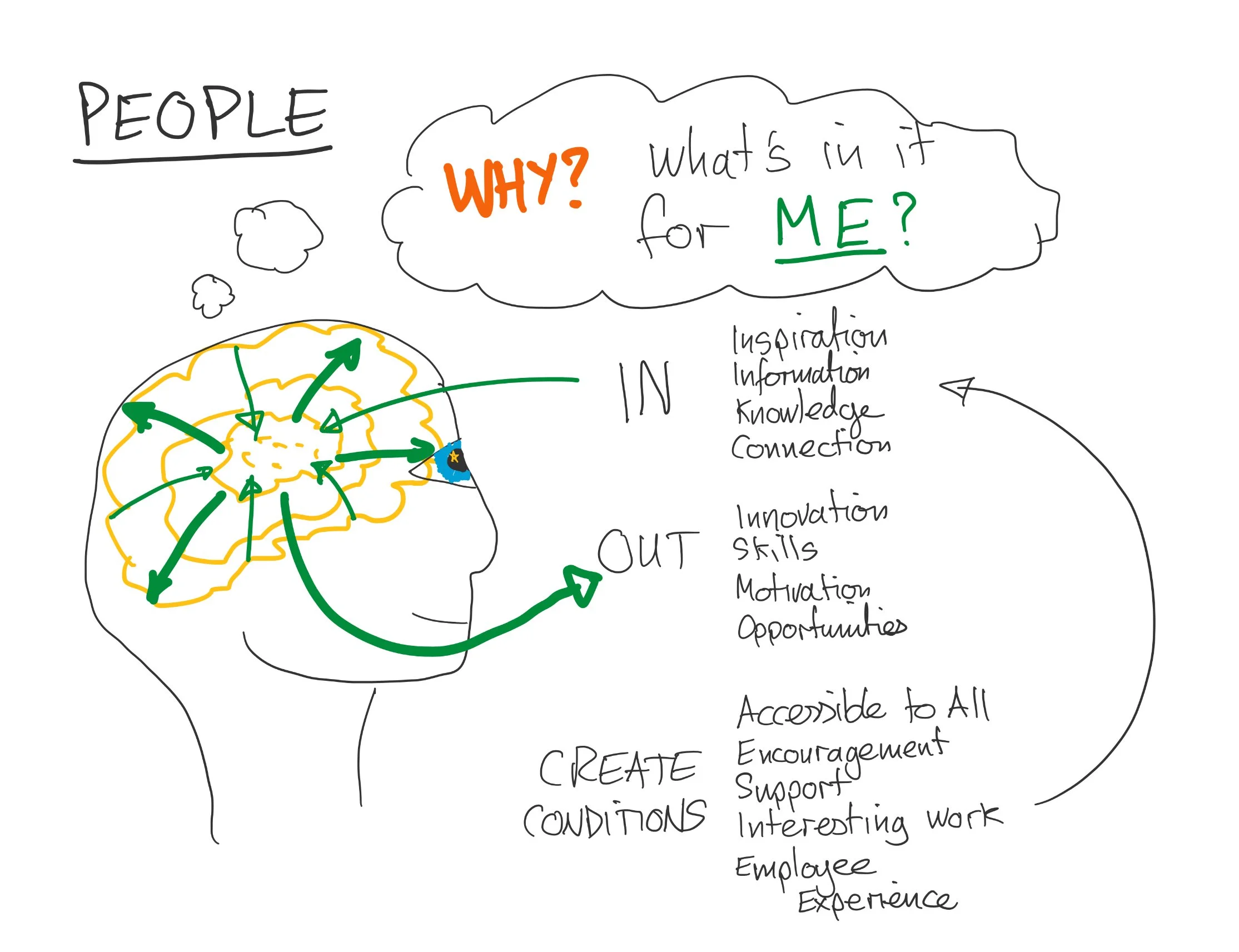
‘Leaders’ is the first, or last (as I explain in the post), step of the ‘Maker Movement’ we’re going to delve into. They’re critical to our success and to the success of inspiring and directing the organisation to help them understand what the platform is, what it does, and why it’s important to THEM, and the organisation. But there are different types of leaders! Who? Well read this post to understand that, and how Backstage Leadership can be used to drive our value hypothesis!

Community
In this post I explore ‘Community’ and how we can use them to help us build adoption and enablement. In this blog post I describe:
What ‘community is’
Where it fits in helping us achieve our goal of growing adoption and enablement
How technology, process, and people, come together to enable community behaviours and feelings, supported by the culture we need to establish to help it to happen
What different stages of community / platform might look like and where it aligns with the value model
How we can generate traffic INTO the community to attract more members and traffic WITHIN the community to provide value, and fun, to it’s members
Come and jump in to learn more!
The most valuable capability in an AI-rich world is not access to knowledge, but the ability to develop and exercise judgement.
Mentors, coaches, communities and orchestrated agents are all different mechanisms for building judgement, trust and capability at scale.