
Model 07 · The AI Agent Lifecycle
Agents are too often treated as if the work ends at deployment.
That is a dangerous habit. Agents do not behave like static artefacts. They read changing data, act through permissions, interact with workflows and continue operating long after the original builder has moved on. Without ownership and monitoring, they drift from capability into liability.
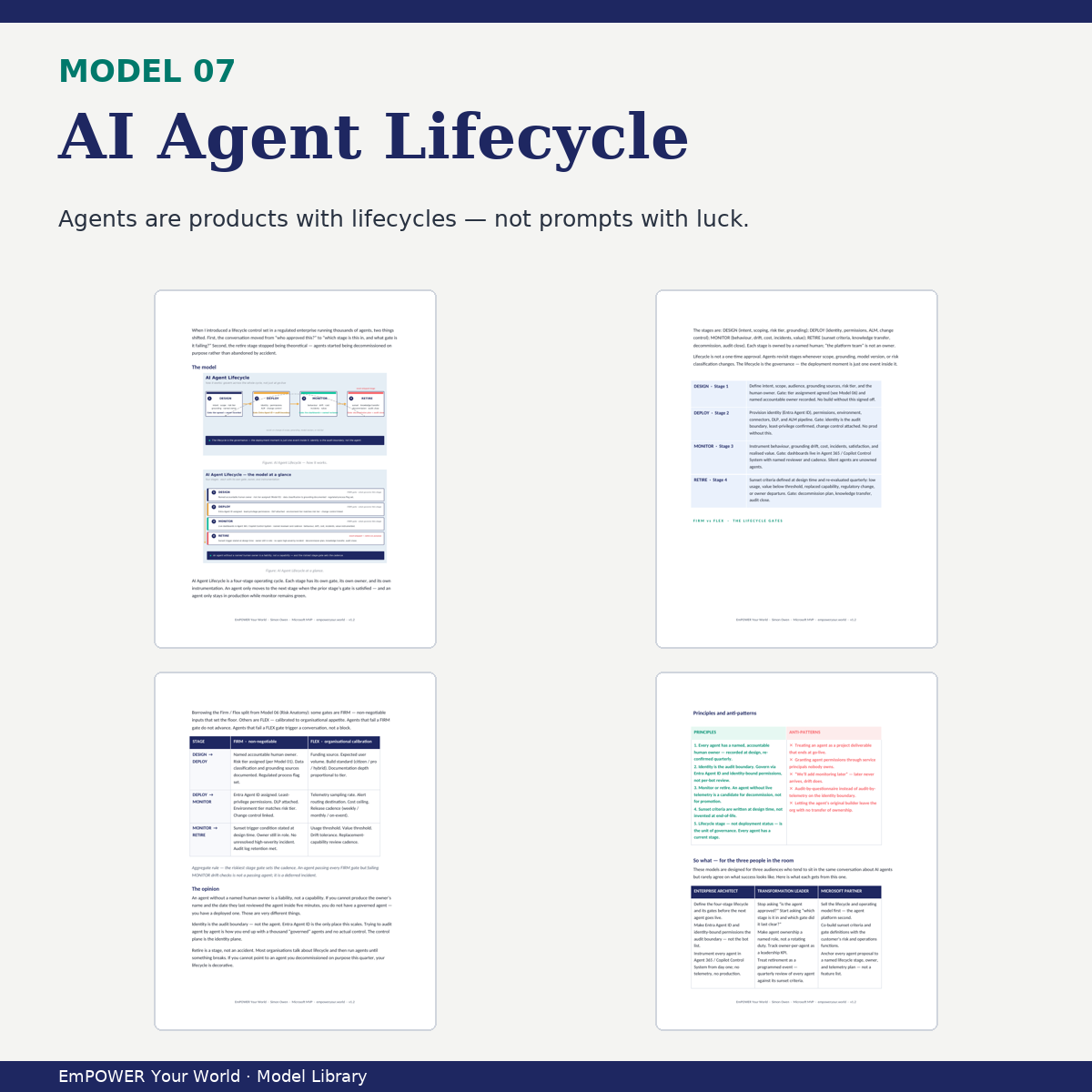
The AI Agent Lifecycle treats agents as products with four stages: Design, Deploy, Monitor and Retire. Each stage has its own gate, owner and evidence. An agent only moves forward when the previous gate is satisfied, and it only stays in production while monitoring remains healthy.
The retire stage is the one most organisations neglect. Agents remain live because nobody defined the conditions under which they should stop. Low usage, value below threshold, owner changes, incidents, grounding drift or replacement capability should all be part of the lifecycle conversation.
The model also makes ownership explicit. “The platform team” is not an owner. Every agent needs a named accountable human and a current lifecycle stage.
The central idea is simple: agents are products with lifecycles, not prompts with luck.