The Frontier Capability Organisation: Papers, Architecture and Experiments
Organisations are getting remarkably good at removing work. Far fewer understand the capability and judgement that work used to create.
The Frontier Capability Organisation (FCO) is a proposition about that gap: capability can be treated as renewable infrastructure, so you can create value today without hollowing out your future.
Choose your depth. Start with PS02 for the short introduction, then go further with PS03, The Frontier. The architecture papers and experiments follow. Everything here is free to read. You don't have to believe FCO. Bring one consequential problem and let reality answer back.
Proposition
-
![Cover Image: 'Are we becoming more capable or merely more productive?]()
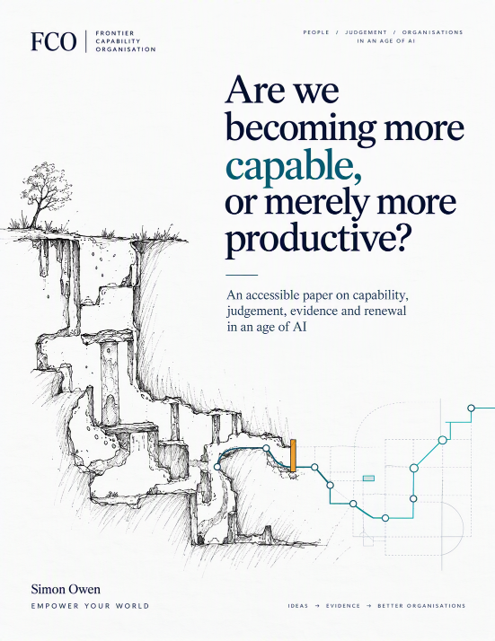
PS02 : The FCO Entry Paper
A short, accessible introduction to the Frontier Capability Organisation: why organisations can get more productive while quietly getting less capable. Start here if you're new to FCO.
-
![Research Paper : The Frontier Capability Organisation]()
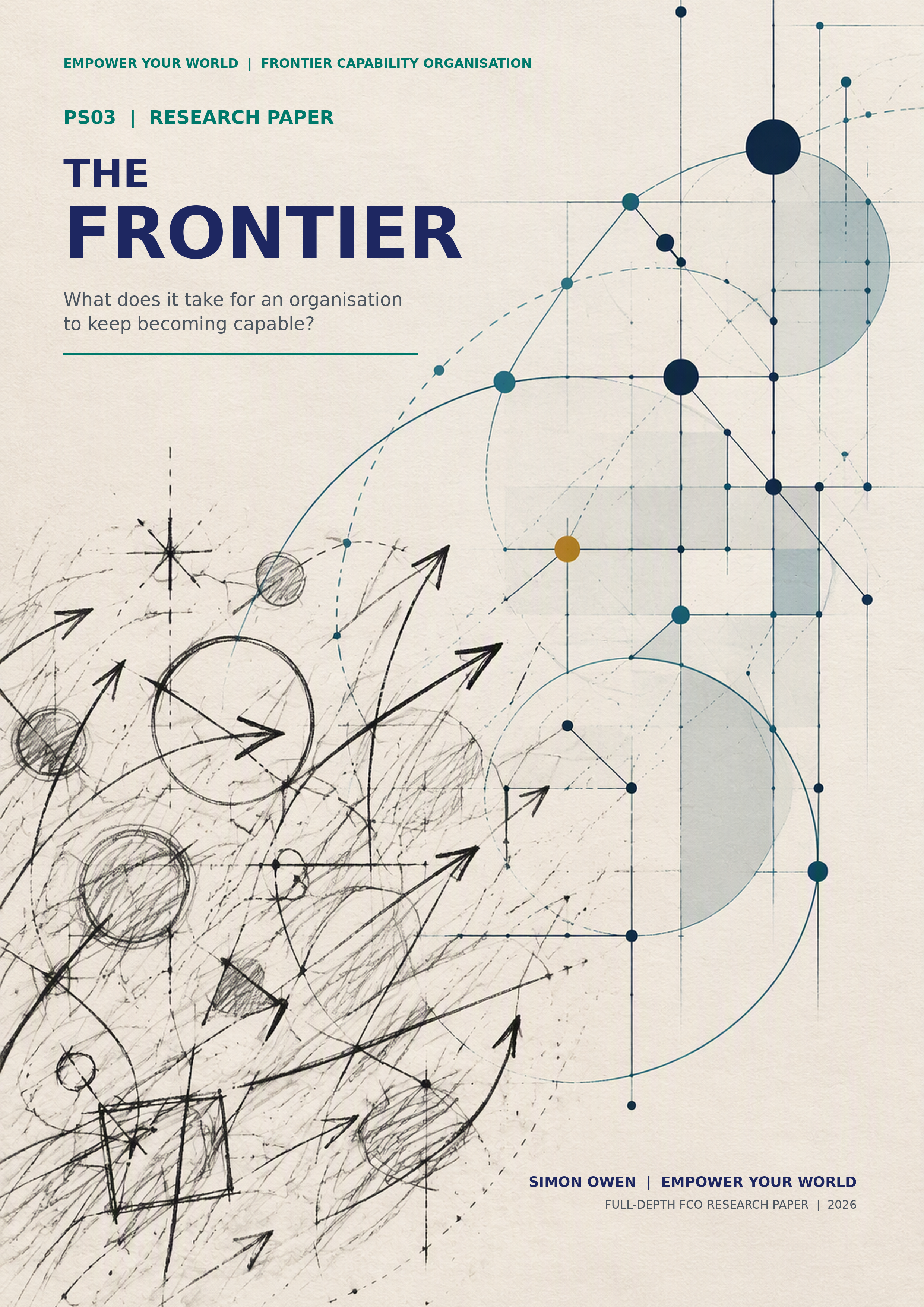
PS03 : The Frontier Research Paper
The full-depth research paper. It asks what your organisation's success is quietly using up, follows the enquiry from AI adoption to organisational capability, and invites you to test FCO on one real problem rather than take it on trust.
Architecture
-
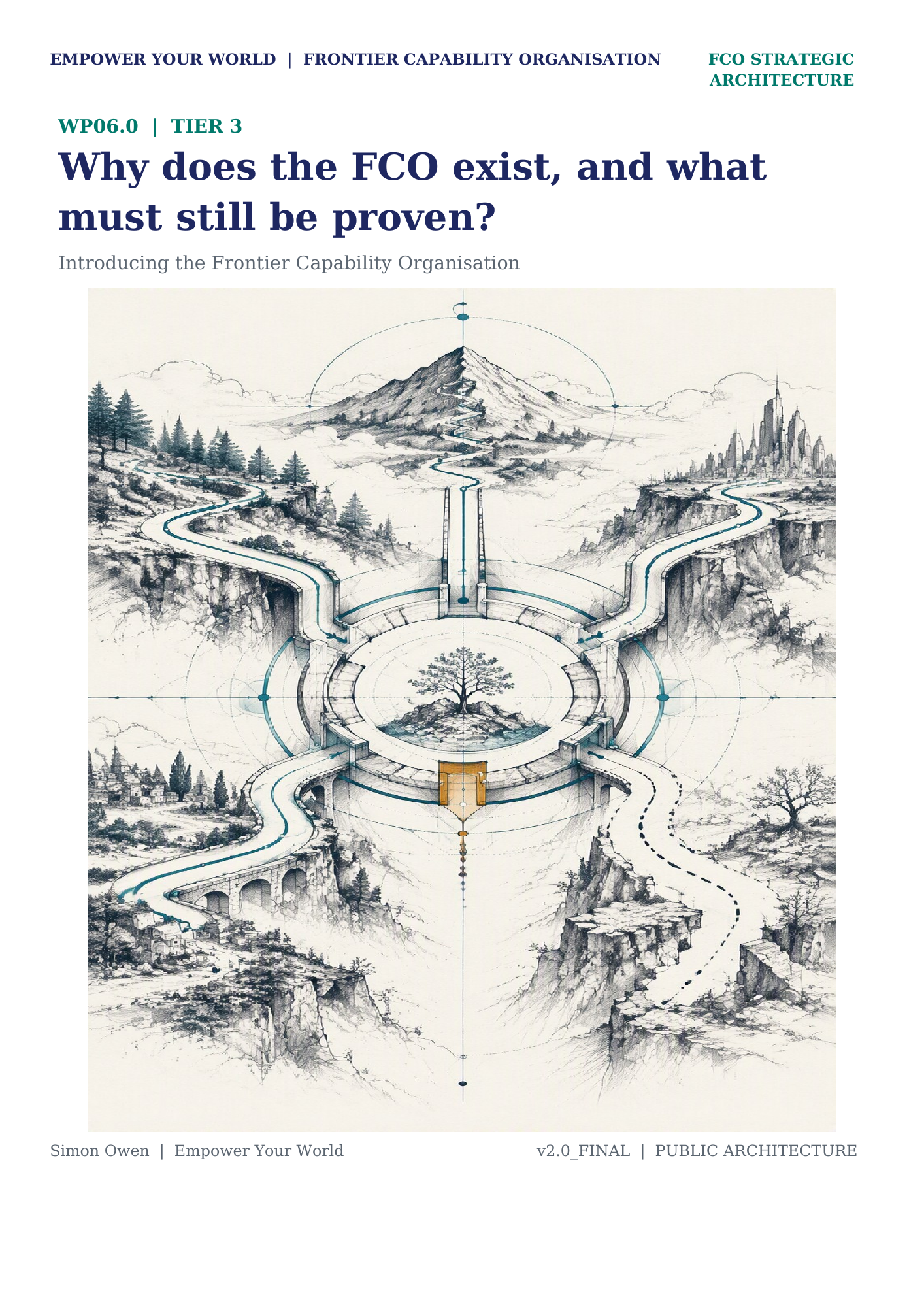
![WP06.0: Introducing the Frontier Capability Organisation]()
WP06.0: Introducing the Frontier Capability Organisation
Why the FCO exists, the problem it addresses and what still has to be proven. Start here for the architecture series.
-
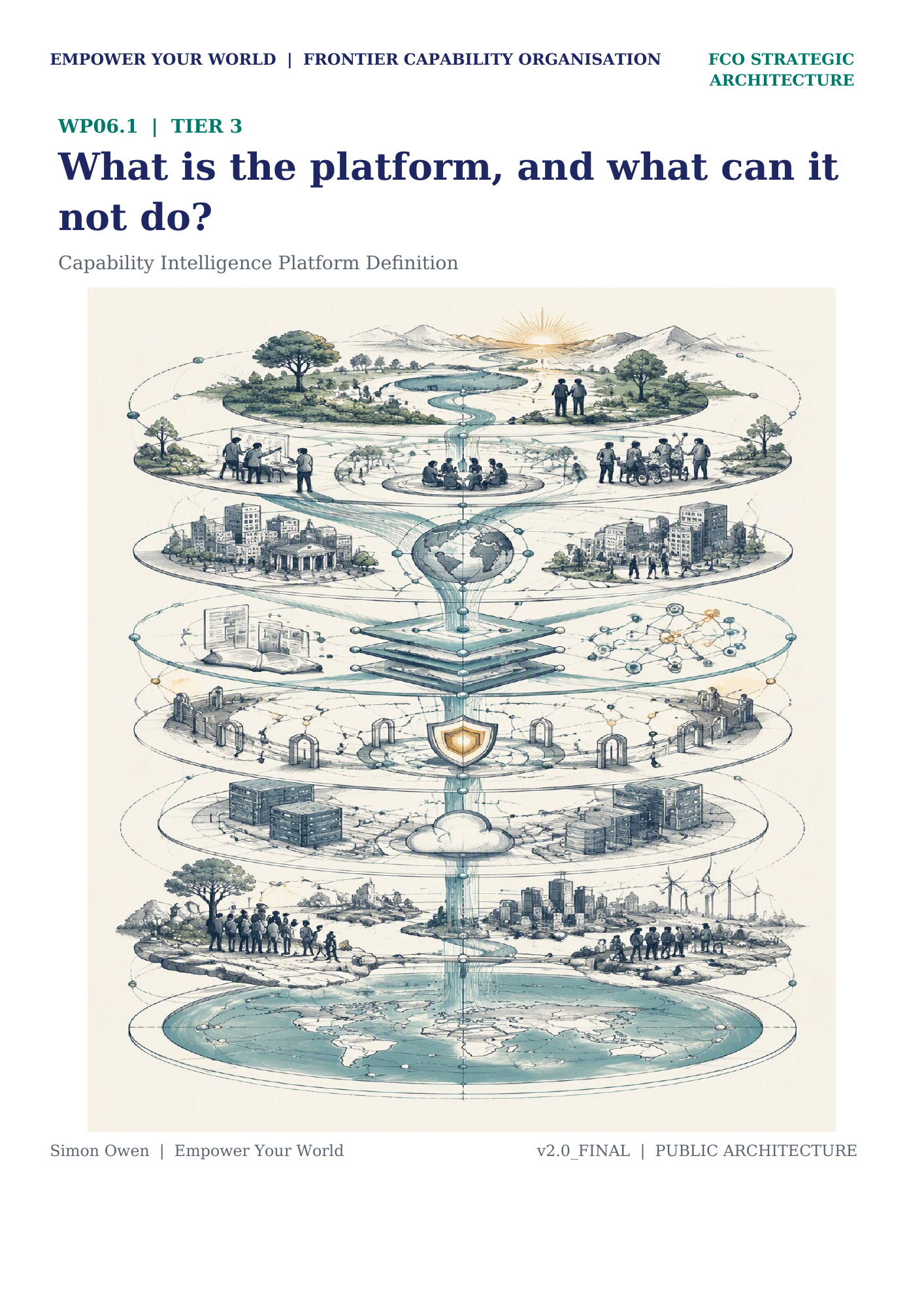
![WP06.1: Capability Intelligence Platform Definition]()
WP06.1: Capability Intelligence Platform Definition
What the platform behind the FCO is for, and just as importantly what it must never do.
-
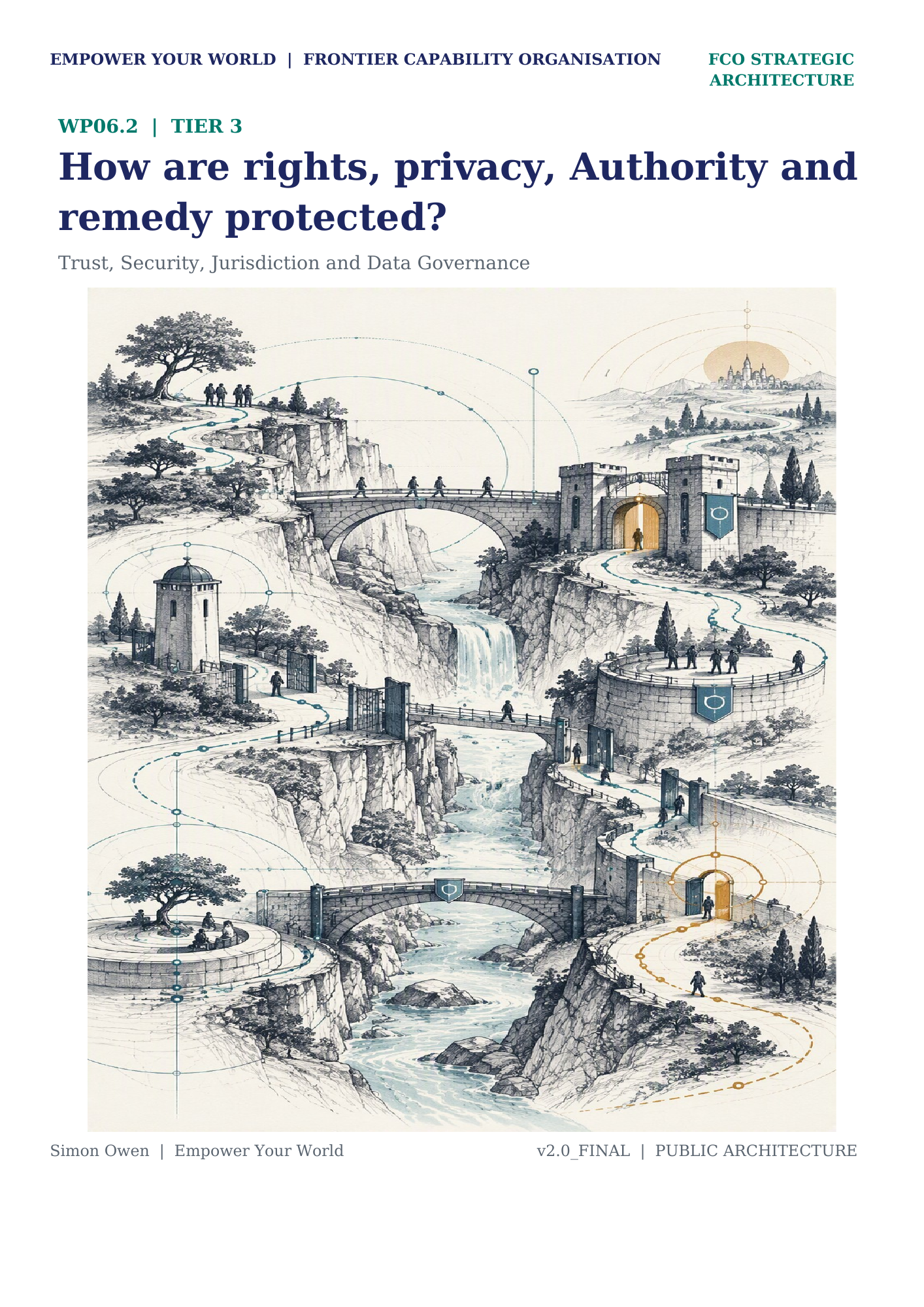
![WP06.2: Trust, Security, Jurisdiction and Data Governance]()
WP06.2: Trust, Security, Jurisdiction and Data Governance
How capability evidence is protected, who controls it and where it can travel, so that growth never justifies surveillance or hidden data joins.
-
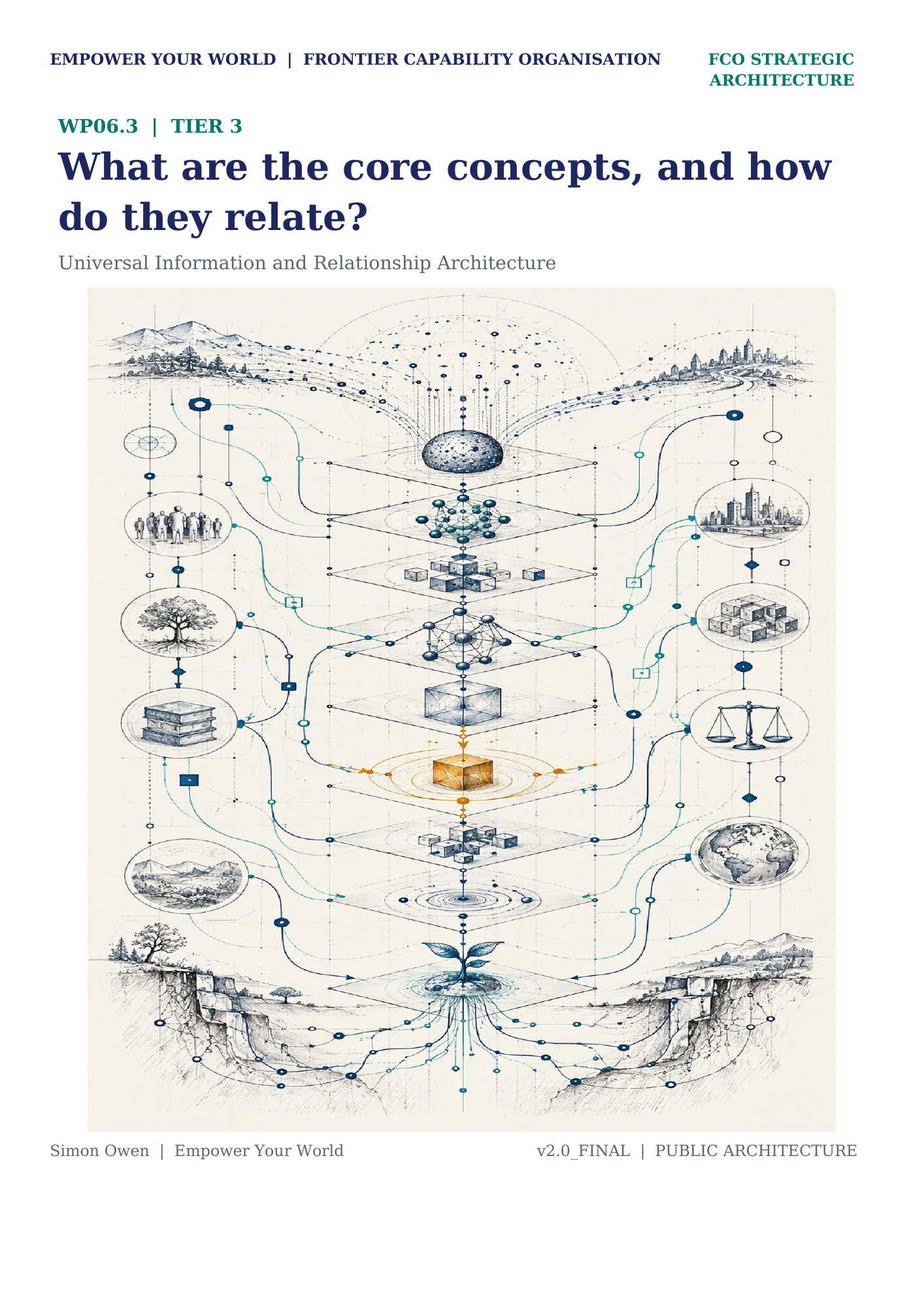
![WP06.3: Universal Information and Relationship Architecture]()
WP06.3: Universal Information and Relationship Architecture
The shared language of the FCO: the core concepts, how they connect, and the connections the system must never make.
-
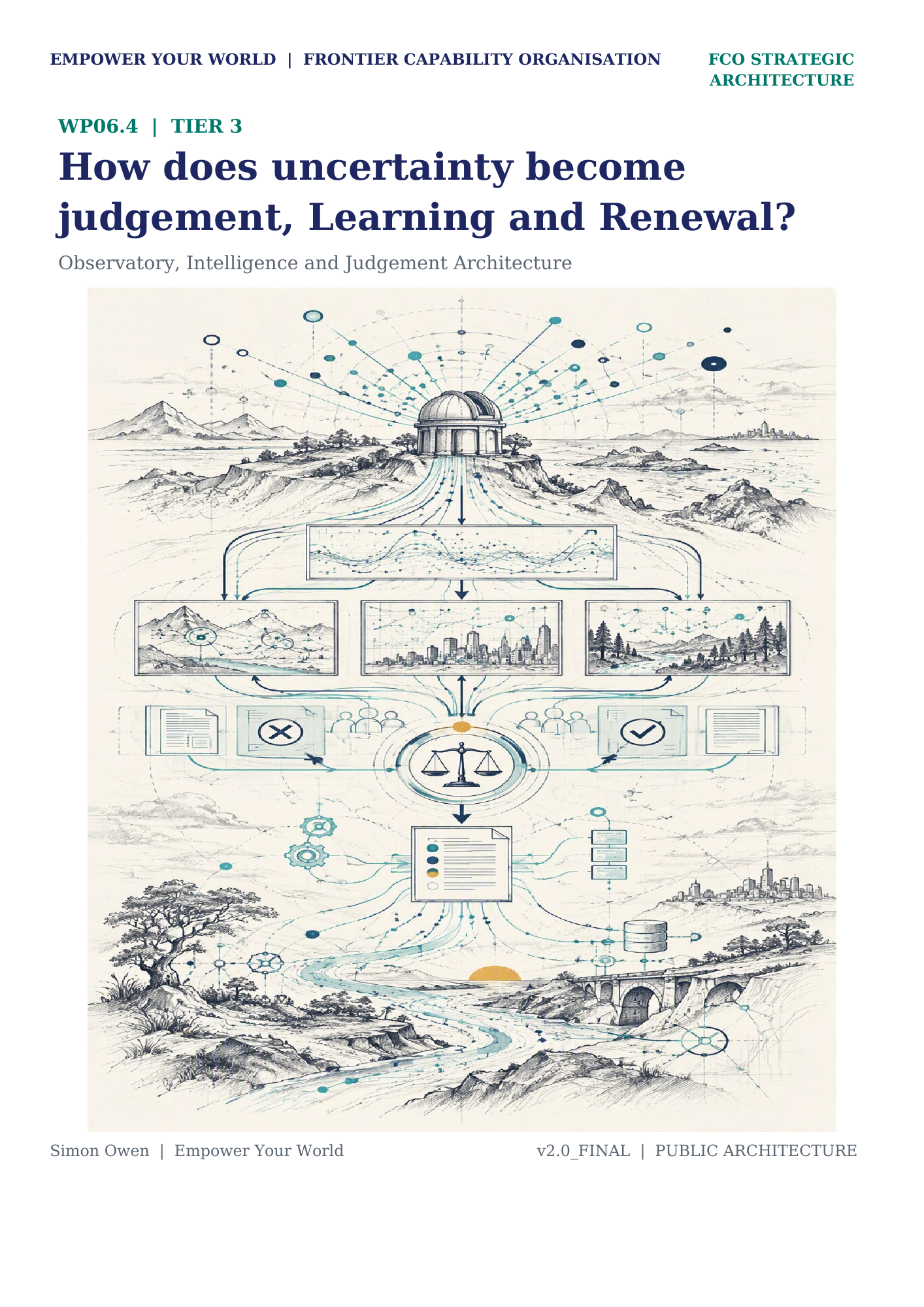
![WP06.4: Observatory, Intelligence and Judgement Architecture]()
WP06.4: Observatory, Intelligence and Judgement Architecture
How an organisation can see capability forming, concentrating and fading, so that people judge better. It informs decisions but never makes them.
-
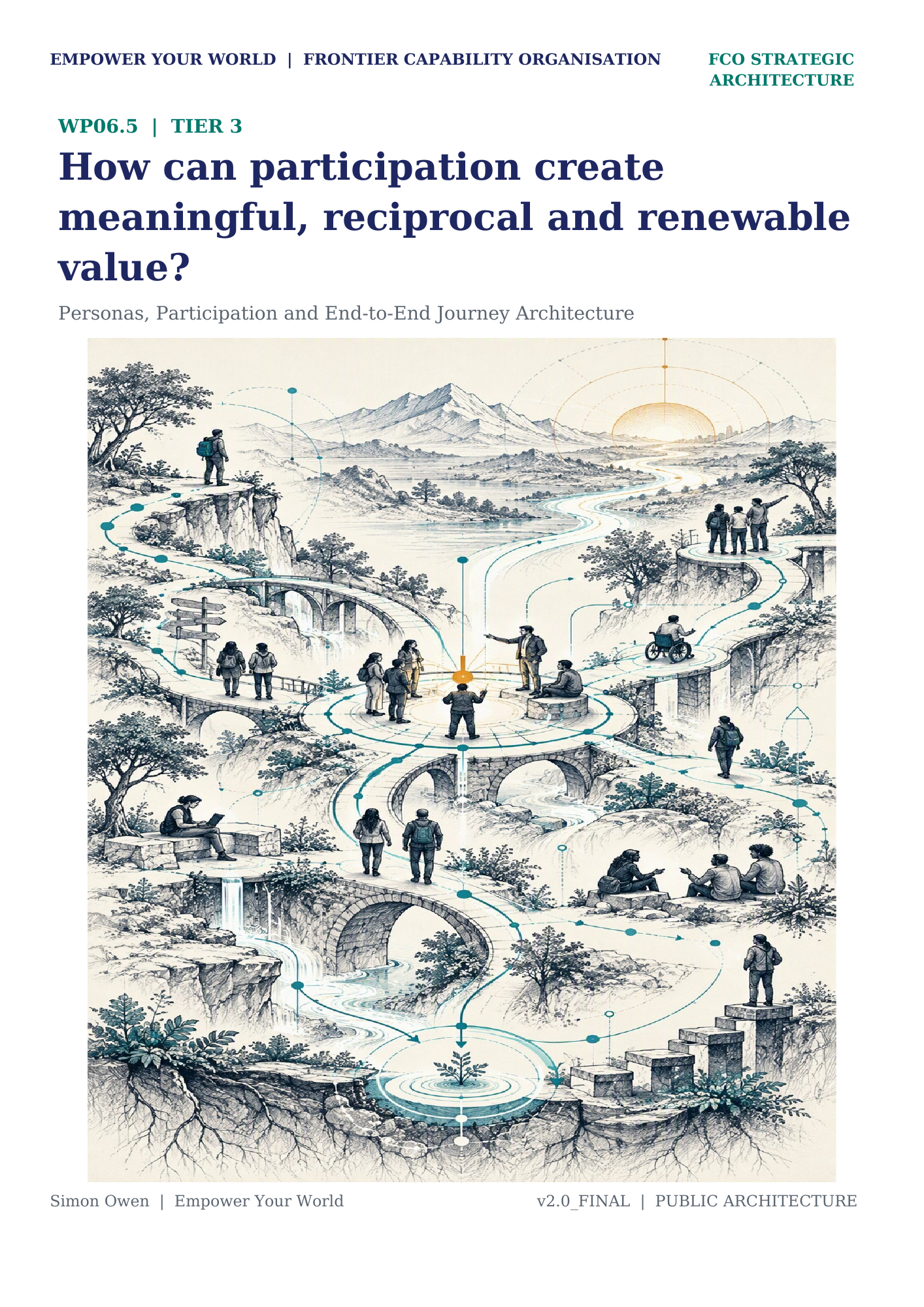
![WP06.5: Personas, Participation and End-to-End Journey Architecture]()
WP06.5: Personas, Participation and End-to-End Journey Architecture
How different people (newcomers, experts, managers, stewards, partners and customers) take part in an FCO, and what each should get from it.
-
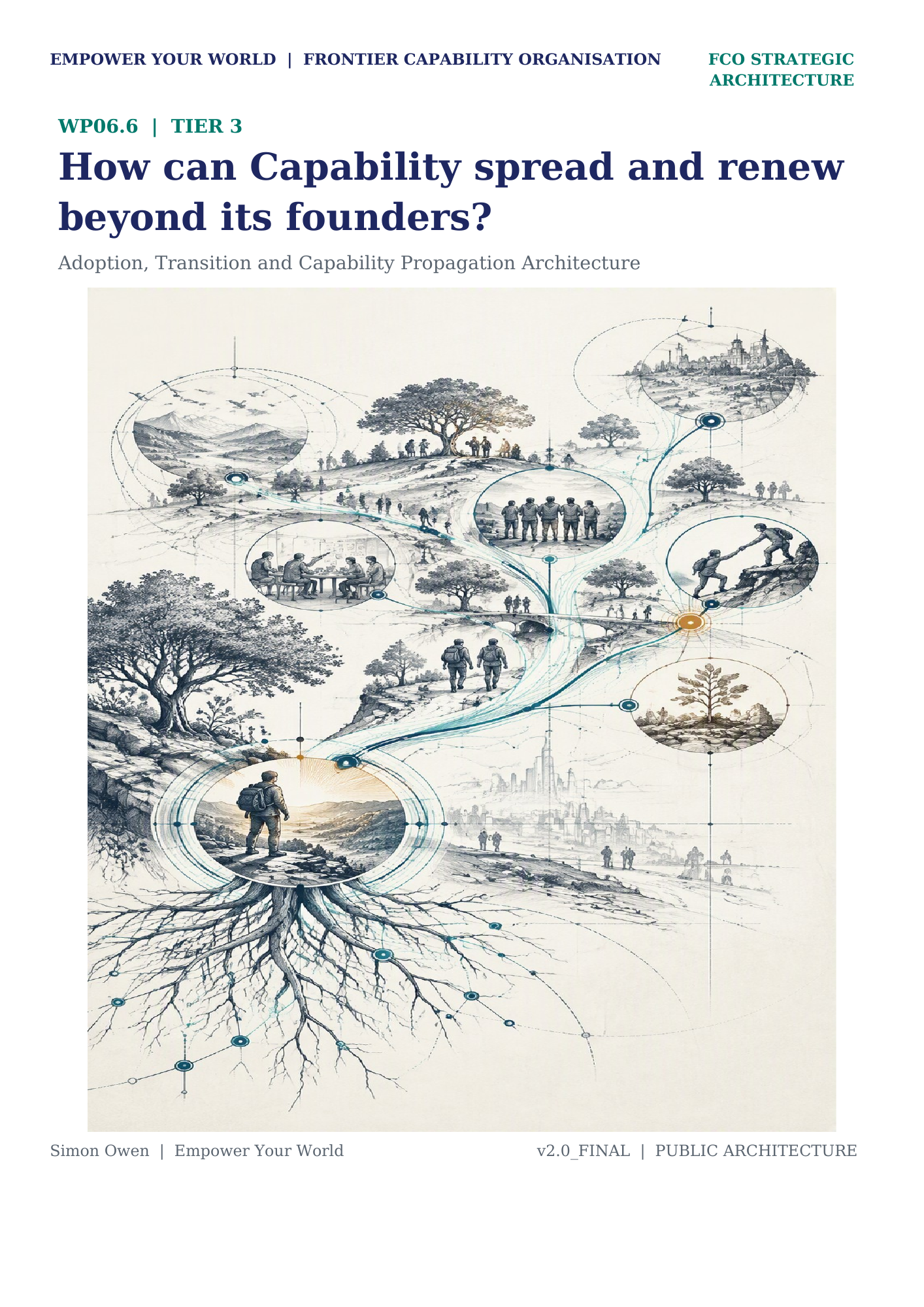
![WP06.6: Adoption, Transition and Capability Propagation Architecture]()
WP06.6: Adoption, Transition and Capability Propagation Architecture
How an organisation can start moving towards FCO from where it is, and how capability spreads without waiting for a wholesale restructure.
-
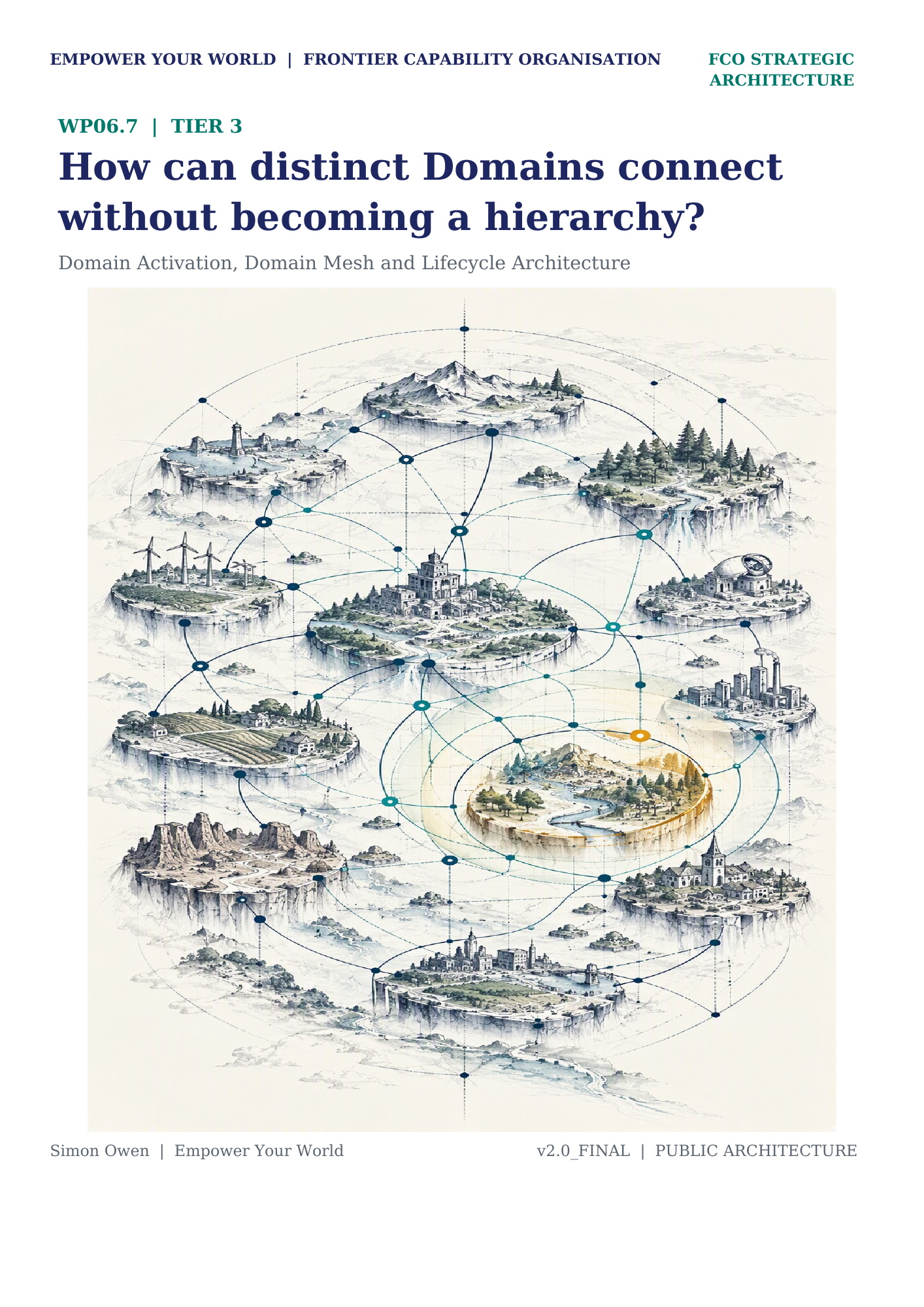
![WP06.7: Domain Activation, Domain Mesh and Lifecycle Architecture]()
WP06.7: Domain Activation, Domain Mesh and Lifecycle Architecture
How areas of capability, such as AI adoption or cybersecurity, keep their own language while connecting through shared rules.
-
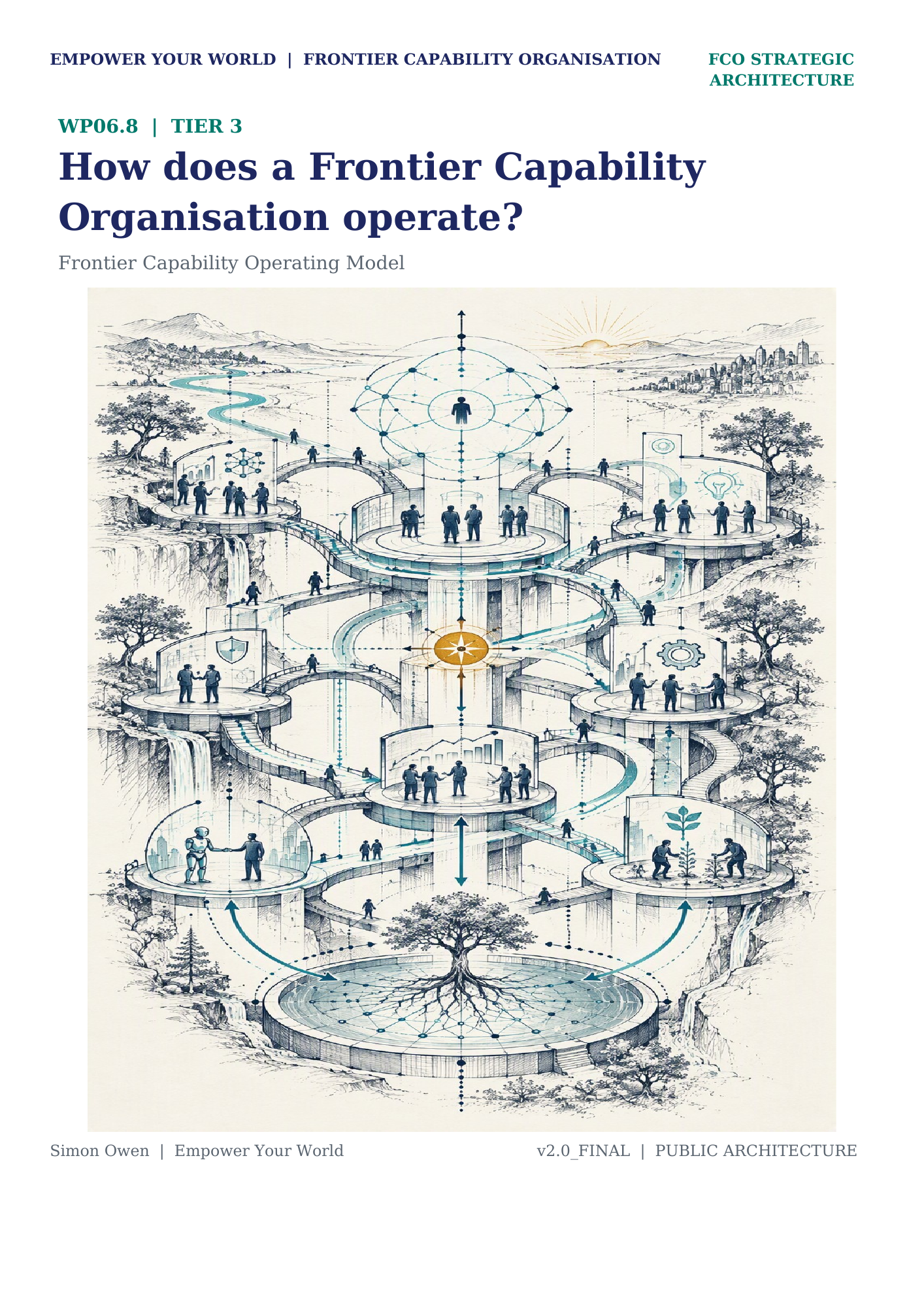
![WP06.8: Frontier Capability Operating Model]()
WP06.8: Frontier Capability Operating Model
The day-to-day running of an FCO: roles, decision rights, rhythms and stewardship, including how humans and AI agents share work and accountability.
-
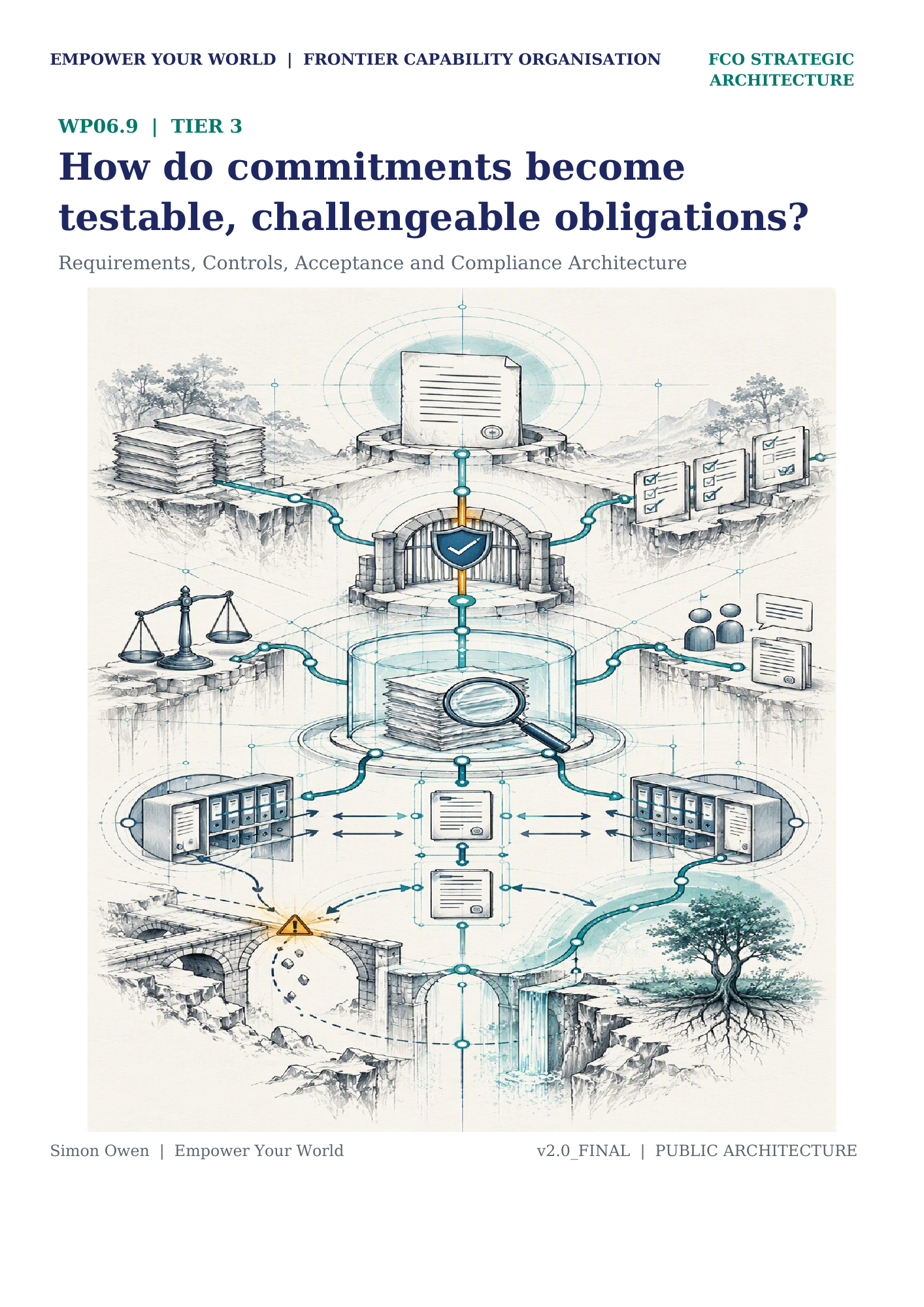
![WP06.9: Requirements, Controls and Acceptance Architecture]()
WP06.9: Requirements, Controls and Acceptance Architecture
What the system must do and must never do, and how anyone can check that it does.
-
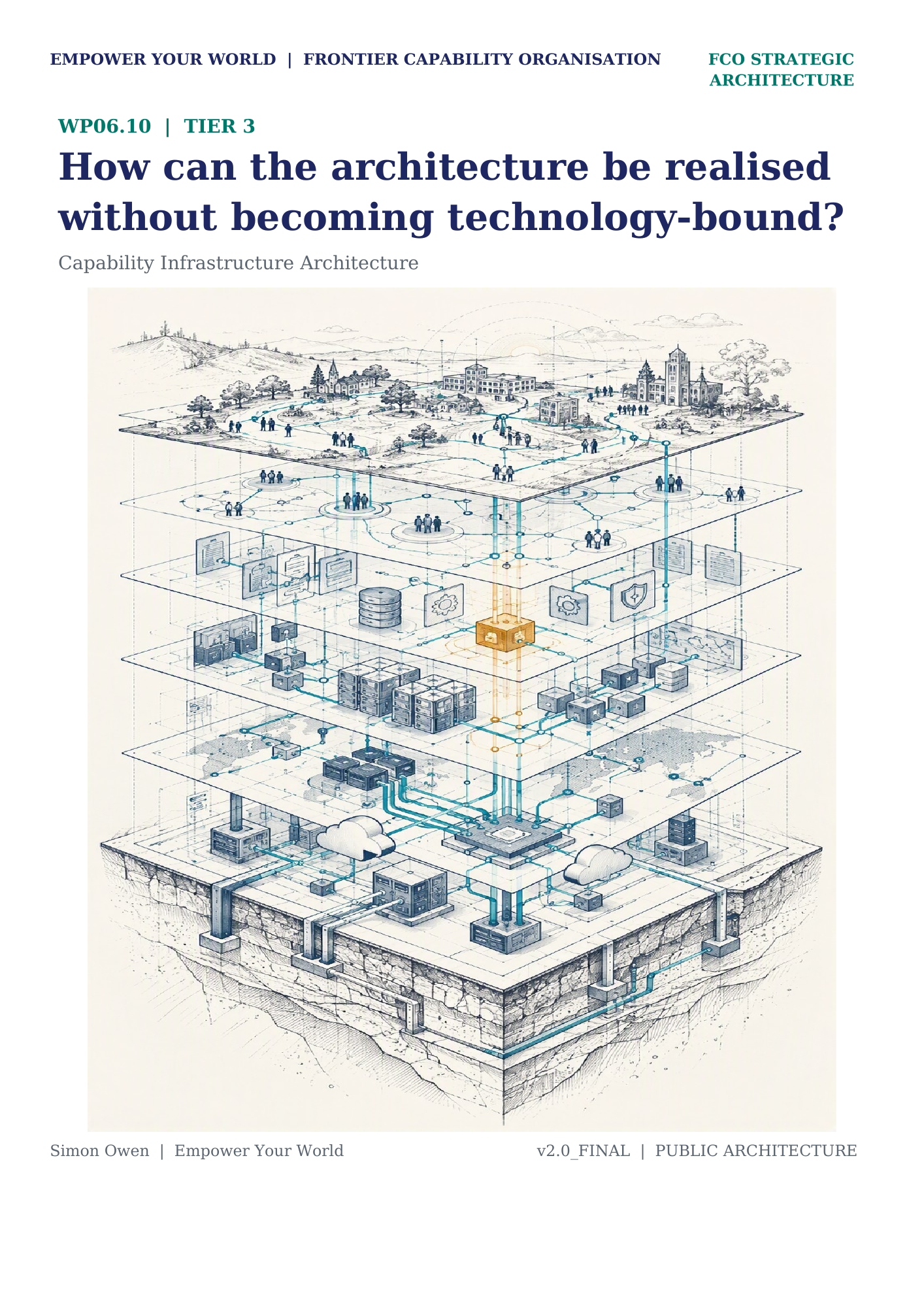
![WP06.10: Capability Infrastructure Architecture]()
WP06.10: Capability Infrastructure Architecture
The technical foundations underneath the FCO, built to trace every agent action back to a human who is accountable for it.
-
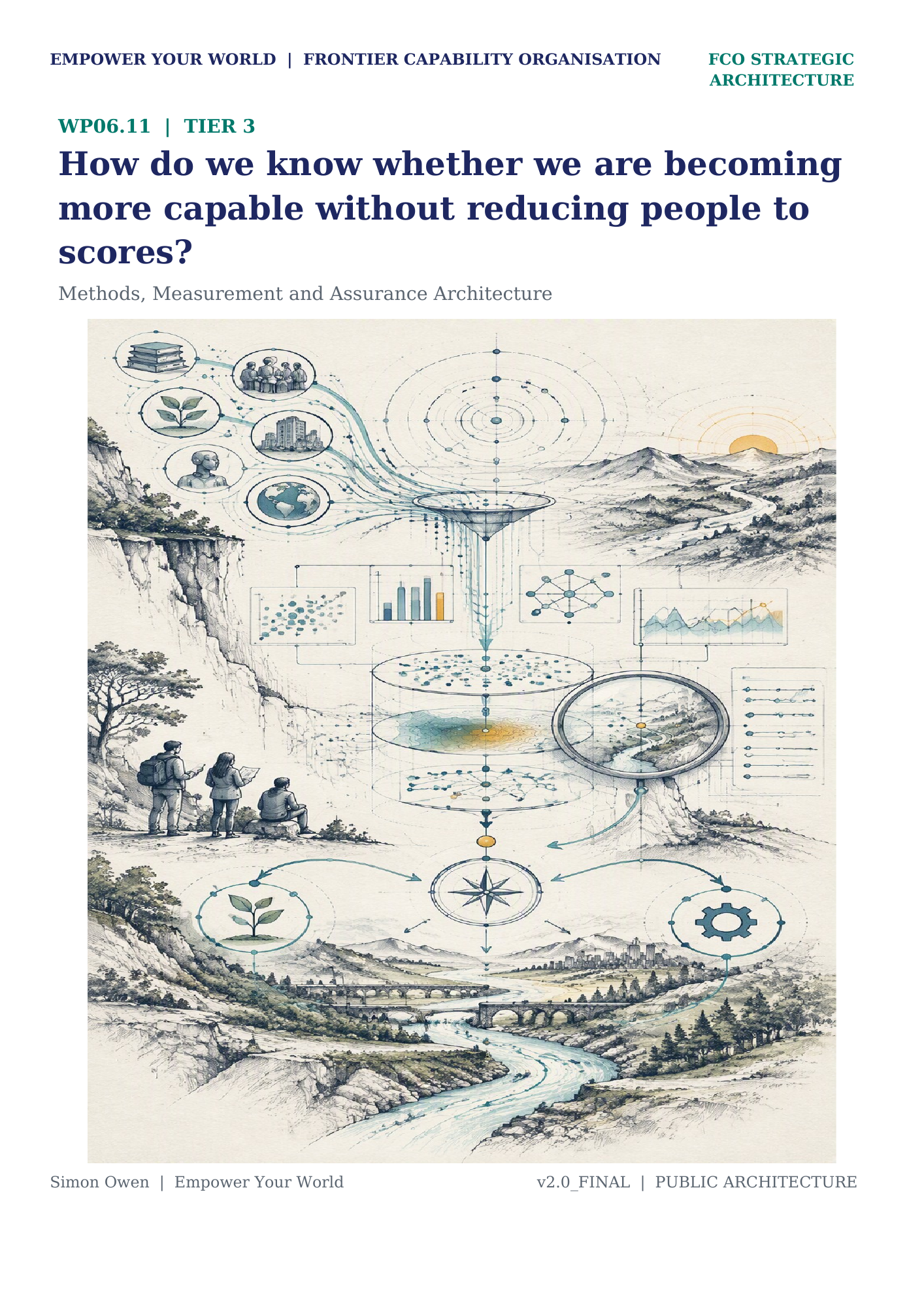
![WP06.11: Methods, Measurement and Assurance Architecture]()
WP06.11: Methods, Measurement and Assurance Architecture
How to gather evidence without scoring people, and how confident you can be in what it shows.
-
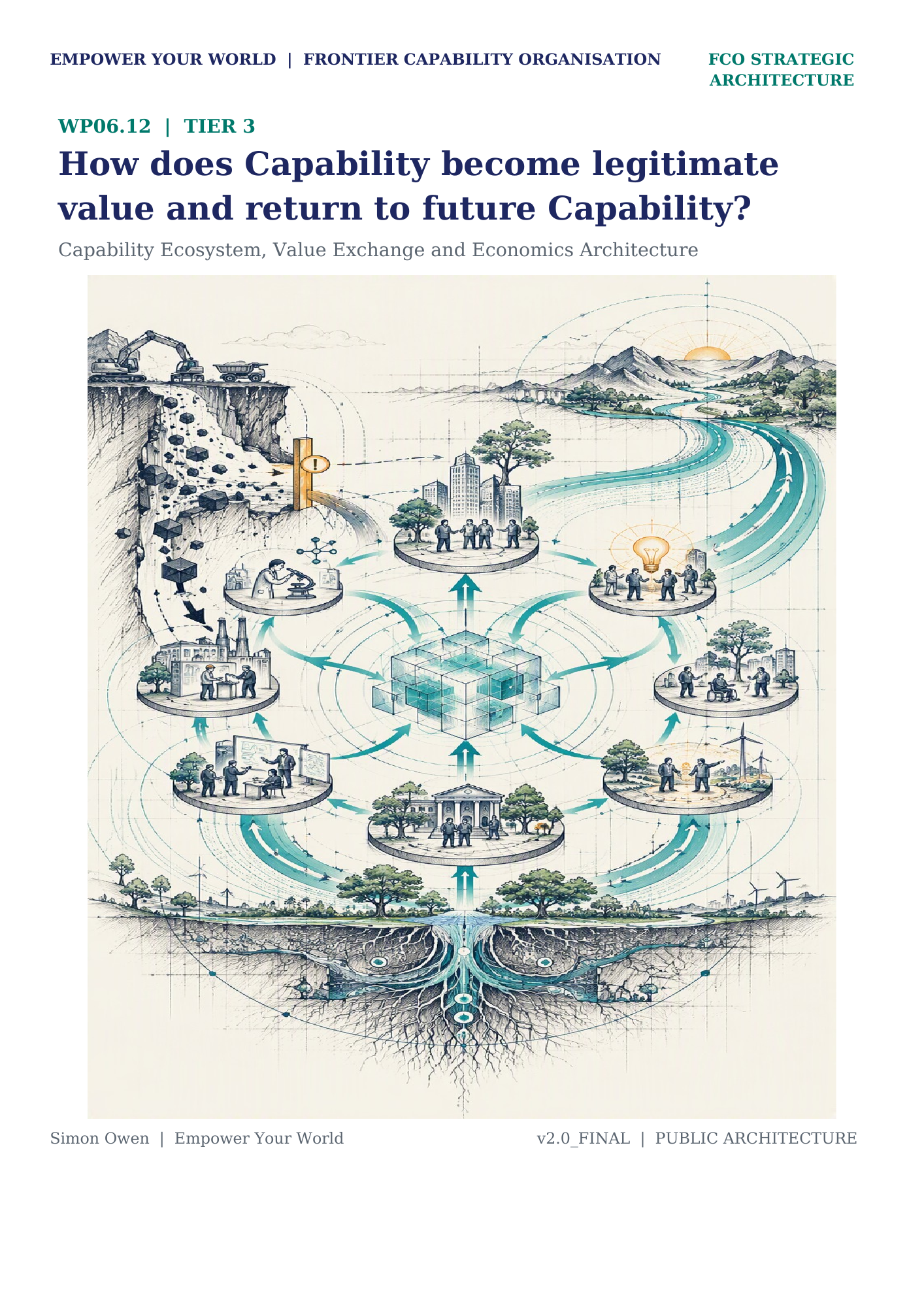
![WP06.12: Ecosystem Participation, Value Exchange and Economics Architecture]()
WP06.12: Ecosystem Participation, Value Exchange and Economics Architecture
How value, contribution and reward flow between people, communities, partners and organisations, so the effort that sustains capability is paid for rather than taken for granted.
-
![Cover Image: 'Are we becoming more capable or merely more productive?]()
The FCO Entry Paper
A short, accessible introduction to the Frontier Capability Organisation: why organisations can get more productive while quietly getting less capable. Start here if you're new to FCO.
-
![Research Paper : The Frontier Capability Organisation]()
The Frontier Research Paper
The full-depth research paper. It asks what your organisation's success is quietly using up, follows the enquiry from AI adoption to organisational capability, and invites you to test FCO on one real problem rather than take it on trust.