
Model 04 · The Human Advantage Framework
Many AI strategies begin with a productivity target and only later discover they also needed a workforce strategy.
The default market conversation is about automation: what can be removed, sped up or made cheaper. That is useful, but incomplete. Some work should be automated. Some should be AI-supported. Some should remain anchored in human judgement, accountability and trust.
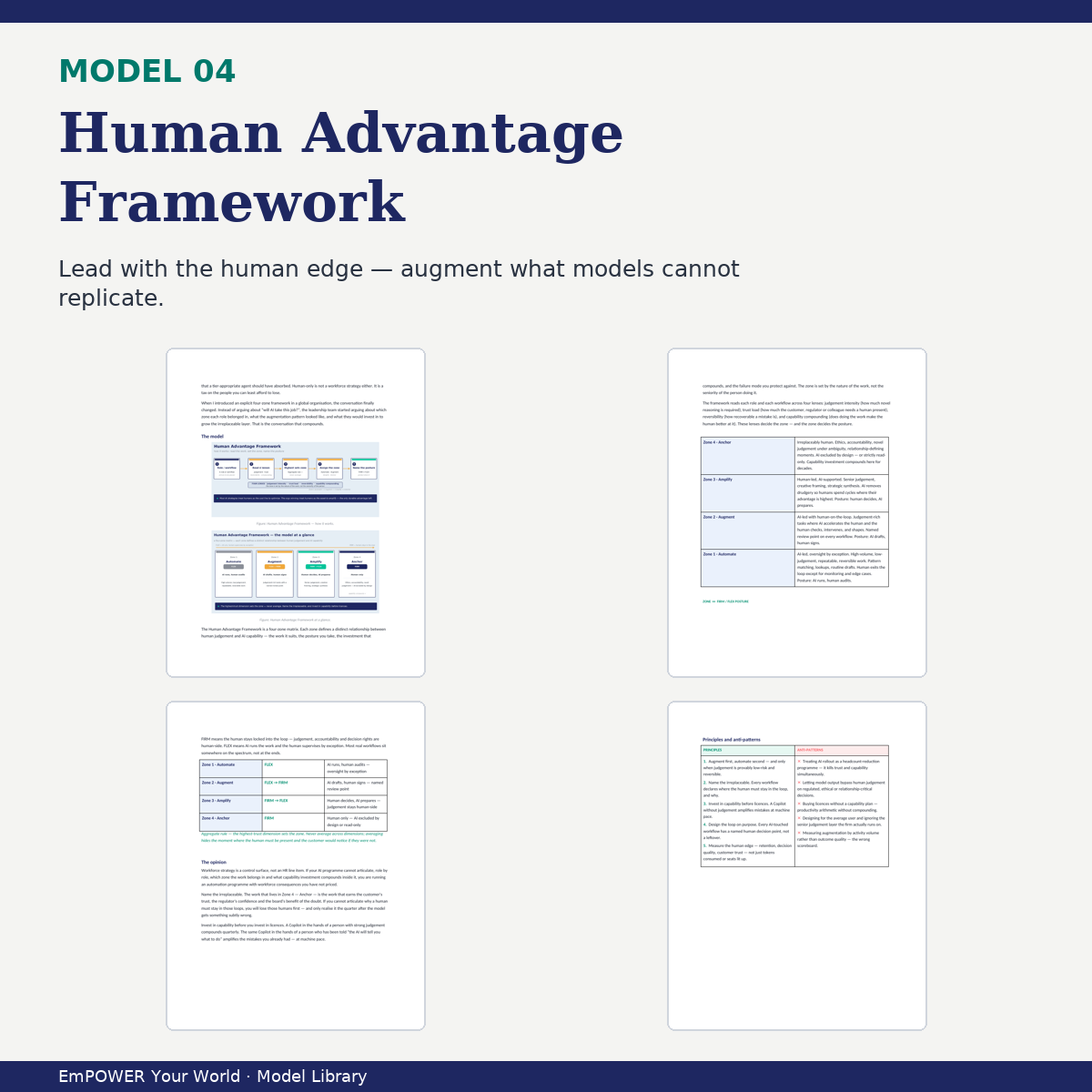
The Human Advantage Framework gives organisations a way to have that conversation deliberately. It separates work into four zones: Automate, Augment, Amplify and Anchor. Each zone represents a different relationship between human judgement and AI capability.
The most valuable part of the model is the boundary work. It helps leaders decide where AI should run, where it should prepare, where a human must decide, and where AI should be excluded or read-only by design.
The risk is not simply that organisations automate too much. It is that they automate without naming what must stay human, then discover too late that they have weakened the judgement, trust and capability layers they actually depend on.
The central idea is simple: AI is not the advantage. Human judgement is.